Mobility
May 23, 2026
Balance and Mobility After 50
Balance and mobility are part of daily strength: stairs, uneven ground, getting up and down, reaching, carrying, and recovering position.
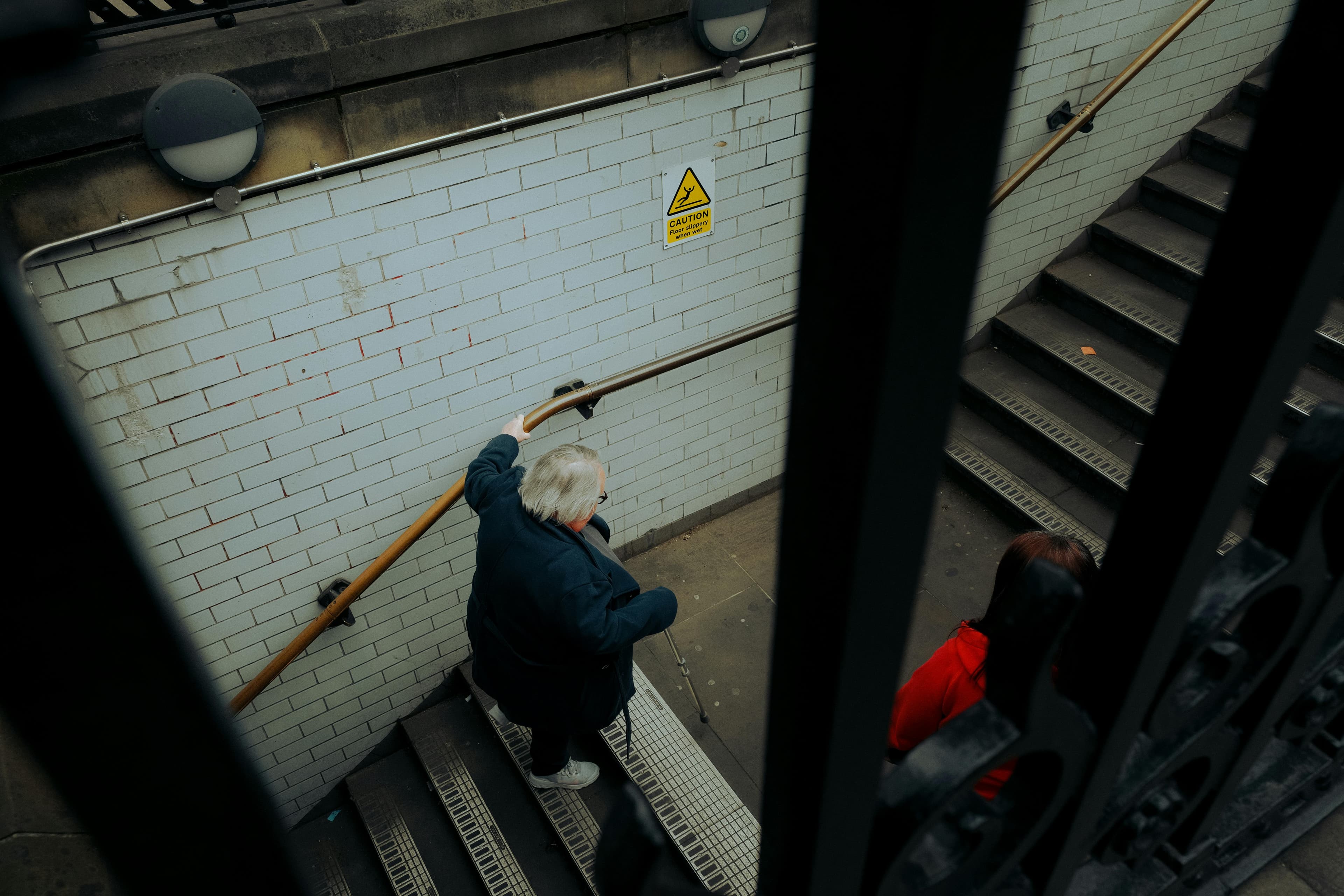
Balance and mobility after 50 are not a side path from strength. They are how strength stays usable.
The question is not whether someone can do a gym exercise in isolation. The question is whether strength shows up in daily life: stairs, uneven ground, getting up and down, reaching overhead, carrying a bag, changing direction, and recovering position when movement gets less predictable.
That is the StrongPath frame. Balance and mobility are part of preserving daily capacity.
What balance and mobility mean
Balance is the ability to control position. Mobility is the ability to move through useful ranges. Strength is the ability to produce force inside those ranges.
They work together. A stronger leg helps on stairs, but the ankle, hip, foot, trunk, and nervous system still have to organize the movement. More mobility can make a position easier to reach, but it matters most when the body can control it.
This is why balance work should not be treated as a novelty. It belongs next to resistance training for older adults, protein, recovery, and ordinary walking.
Why it matters after 50
After 50, many people do not first notice a dramatic change. They notice a smaller margin.
A curb asks for more attention. Getting off the floor takes more planning. A sloped driveway feels different. Reaching for something while holding a bag feels less automatic. A parent may still be independent, but the movement budget has narrowed.
None of this means decline is fixed. It means the plan should train the parts of daily movement that are easiest to ignore.
The CDC's older-adult activity guidance includes aerobic activity, muscle-strengthening activity, and balance activity. That matters because balance is not a substitute for strength, and strength is not a substitute for balance.
Start conservatively
The first rule is simple: make practice stable enough to repeat.
For many adults, that means starting near a counter, wall, sturdy chair, or rail. It means small ranges, slow control, and stopping before fatigue makes the movement sloppy. It means choosing exercises that feel specific, not intimidating.
Useful starting categories:
- supported stance work
- sit-to-stand practice
- step-up practice
- gentle reaching
- ankle and hip mobility
- light carries
- controlled floor-to-stand practice when appropriate
The goal is not to prove anything. The goal is to rebuild movement options carefully.
Simple tools can help
Tools do not create balance or mobility by themselves. Practice does.
Simple tools can make practice easier to set up. A balance pad can make supported stance work more specific. Yoga blocks can bring the floor closer. A foam roller can support recovery and positioning. A stretching strap can help with controlled range without forcing it.
If balance feels unreliable, start near support and consider professional guidance before using unstable surfaces.
Use tools as supports, not promises.
Mobility is not stretching forever
Mobility work is useful when it supports something real.
Can you reach overhead without holding your breath? Can you get down and up with control? Can you take a longer step when the sidewalk asks for it? Can you rotate enough to look behind you, carry something, or move around a crowded room?
That is different from chasing flexibility for its own sake. StrongPath is interested in mobility that gives daily life more room.
If you are rebuilding from a low starting point, read How to Start Lifting Weights at 60. The principle is the same: start modestly, learn the pattern, recover, and progress with care.
For adult children
If you are reading for a parent, keep the tone respectful.
The best first step may not be saying "you need balance exercises." It may be helping set up one easier habit: a clear walking path, a stable chair, a few minutes of supported movement, or a practical conversation with a physical therapist.
The goal is more good days, not a lecture. For the broader family frame, read How to Help Aging Parents Stay Strong.
When to get guidance
Balance and mobility are practical topics, but they can touch medical issues.
If dizziness, faintness, chest pain, new neurological symptoms, recent surgery, recent fall, unexplained weight loss, significant pain, or a major change in function is part of the picture, work with a physician, physical therapist, or qualified clinician before beginning a new exercise plan.
That is not a failure of independence. It is good judgment.
The StrongPath position
Strength, balance, and mobility are one system in daily life.
The point is not to train for a performance identity. The point is to keep more everyday movement available: stairs, errands, travel, family visits, lifting, carrying, reaching, and recovering position.
For the clinical problem underneath many strength and function changes, read What Is Sarcopenia?.
Medical note
This article is educational and is not medical advice. If you have a medical condition, recent fall, recent surgery, unexplained weight loss, chest pain, dizziness, significant balance problems, new neurological symptoms, or a major change in function, work with a physician, physical therapist, or other qualified clinician before beginning a new exercise plan.
Evidence
Sources reviewed
CDC, 2025
World Health Organization, 2020
Office of Disease Prevention and Health Promotion, 2025
Curated next reads
Keep going from here
01

Muscle Loss
What Is Sarcopenia?
Sarcopenia is the age-related muscle loss that can make chairs, stairs, jars, luggage, and recovery feel different.
02

Caregiving
How to Help Aging Parents Stay Strong
A practical guide for adult children who want to help a parent keep more good days without pressure, fear, or taking over.
03
Strength Training
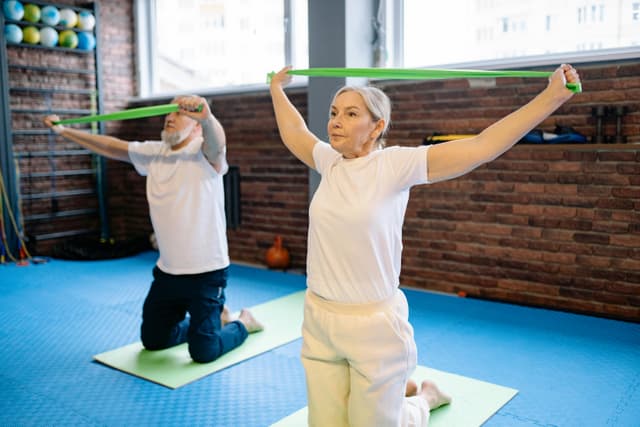
Resistance Training for Older Adults
Resistance training helps train the strength behind chairs, stairs, balance, carrying, travel, and recovery.
04
Nutrition
How Much Protein Do Older Adults Need?
Protein is not a magic fix. It is one of the basic inputs older bodies need for muscle, especially alongside resistance training.